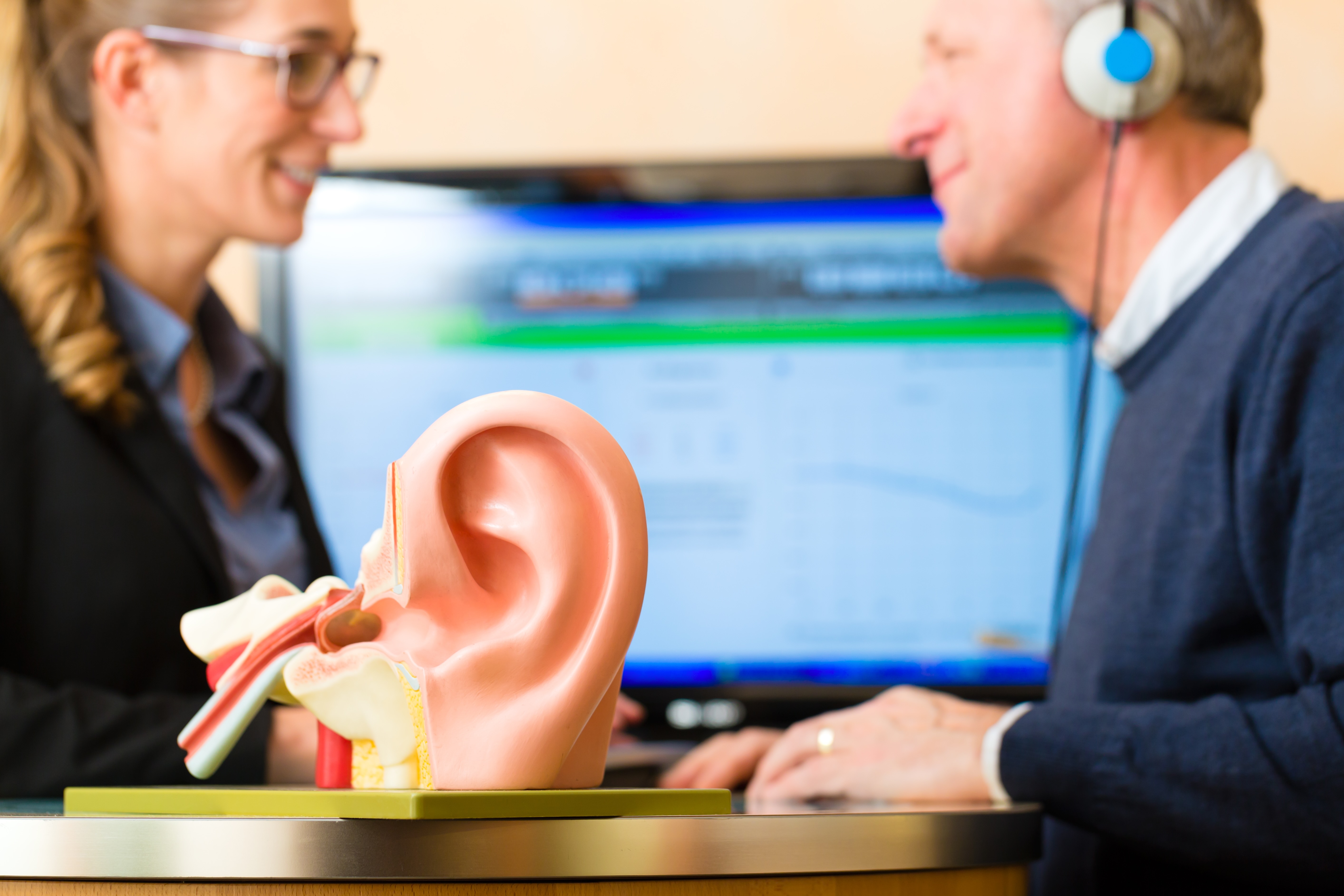
Do you think your hearing isn’t quite what it used to be, or are you concerned about your child’s hearing? If so, you might be wondering what actually happens at a hearing test. Before booking your appointment, it can also be helpful to look at the signs you might need a hearing test first. Here's exactly what to expect at your hearing appointment.
Who Hearing Examinations are For
Anyone might need a test to check their hearing levels. Here are some examples of who they’re for to help you decide whether it’s worth booking one:
Older adults
Hearing naturally becomes less sharp with age, and it's one of the most common reasons people book a test in later life. If you're not sure how often you should have one checked, we've covered that separately.
Younger adults and teenagers
Hearing loss isn't only an older person's issue. The World Health Organisation estimates that over a billion young people worldwide are at risk of hearing damage from unsafe listening habits, such as regularly using headphones at high volume or spending time at loud concerts and venues.
Children
Particularly if you've noticed they're not responding when called, need instructions repeated often, or seem to struggle following conversation.
This is also worth ruling out if you have concerns around anxiety or neurodivergence, since hearing difficulties can sometimes look similar to, or sit alongside, differences in how sound and sensory information are processed more generally.
Anyone with certain health conditions/medications
The World Health Organisation notes that long-term health conditions can be a cause of hearing loss, and RNID confirms that certain medications, including some antibiotics and diuretics used for high blood pressure, can affect hearing too. If either applies to you, it's worth mentioning at your appointment.
5 Types of Hearing Test
Audiologists actually have a number of different tests available, depending on what they need to find out. The five most common are:
Pure-tone audiometry
The classic “listen for a beep” test, where you wear headphones and respond when you hear a sound, used to work out the quietest sound you can hear at different pitches
Speech audiometry
Checks how well you can hear and understand spoken words rather than just simple tones, often a closer match to real-life listening.
Tympanometry
A quick, painless check of how well your eardrum is moving, which can pick up issues like fluid or blockages rather than hearing loss itself.
Bone conduction testing
Similar to the beep test but delivered through a small device behind the ear instead of headphones, helping to pinpoint exactly where a problem is coming from.
Otoacoustic emissions (OAE) testing
“Otoacoustic” simply means “ear sound”: a healthy inner ear naturally produces a very faint sound of its own in response to a click or tone, almost like a tiny echo, and this test uses a soft probe with a microphone in the ear to pick that echo up.
Because it doesn't need you to respond or press anything, it's often used to screen very young children and babies.
Not every test is needed at every appointment — your audiologist will use whichever combination gives the clearest picture of your hearing.
How Does a Hearing Test Work?
The most common type of hearing test, pure-tone audiometry, works by finding your “hearing threshold” (the quietest sound you can just about hear) at a range of different pitches, tested in each ear separately.
Testing across several pitches is important because hearing loss doesn't always affect every frequency. It’s common to lose some higher-pitched sounds first, while lower tones stay clear for longer.
The results are plotted on a chart called an audiogram. Pitch shows along one axis, with volume along the other. A line sitting lower on the chart means you can hear a certain pitch at a quieter volume, while a line higher up means the pitch has to be louder to be heard. Your audiologist will talk you through what your own audiogram shows in plain terms, rather than just handing it over.
None of this is uncomfortable or invasive. You're simply listening and responding, at your own pace.
What Happens at a Hearing Test
Here's what to actually expect, step by step, when you come in for a hearing test at Tunnells:
A chat first
We'll start with a few questions about your hearing and any concerns you've noticed, so the test is guided by what matters to you.
A quick look in your ears
This is to rule out anything obvious, like a build-up of wax, before the test itself.
The hearing test
This is carried out using advanced audiometry technology by a qualified audiologist, assessing your hearing sensitivity across different frequencies in the way described above.
Your results, explained
We'll talk you through your own audiogram in plain terms, so you understand exactly what it shows and what it means for you.
Next steps, if you need them
If the test shows any hearing loss, we'll talk through the options available and make a recommendation based on what suits your hearing, your lifestyle, and your budget, rather than a one-size-fits-all approach.
In Summary
Because we look after both eyes and ears under one roof, it's easy to have your hearing checked at the same time as your regular eye test, without needing a separate appointment somewhere else entirely.
If it's been a while since your last hearing test, or you've noticed any changes recently, there's no need to put it off. It's a quick, straightforward check that can make a genuine difference to your day-to-day life. Book your hearing test at Tunnells in Worcester today, and we'll take care of the rest.