First dentist appointment, first checkup, first hearing exam – and first eye appointment. By the time your child is three, taking them to the optician is one of several important steps in ensuring their health and overall development, so if you think your little one is due their first appointment, explore our guide to everything you need to know ahead of time.
Eye Appointments for Children
Attending their first eye examination is an important priority for any developing child. A huge amount of early years learning occurs visually, and it is important for parents and guardians to be aware of any vision problems early on in a child’s development, in order for the appropriate care and assistance to be provided.
It is recommended that a child attends their first appointment at the age of 3, and then again before they start school, to see if any changes have occurred during these important formative years. These early assessments help to identify any common conditions that can hinder a child’s visual learning and development, and allow for timely intervention to prevent these conditions from causing issues, ensuring their proper visual development and academic readiness.
So, if the time for your child’s first visit to our opticians is growing closer, here is our guide to making the experience a stress-free and informative one.
Preparing for the Eye Appointment
When scheduling your child’s appointment, it’s a good idea to be honest with your child about the importance of eye examinations and how they are intended to help. Before explaining what will happen at the appointment, make sure to emphasise the importance of optician visits and how the visit is needed to make sure that their eyes are healthy and effective. If there are any people in your family who wear glasses, or who have vision problems, then use them as a positive example for your child of someone who requires the help of opticians to see properly, and emphasise that our job as opticians is to support and help those who require our services.
To prepare your child for the appointment, start by explaining in simple terms what will happen, emphasising that the visit is to help their eyes see better. Use positive language to create a sense of excitement and remove fear, and make sure that they are well aware of the processes involved – we will then talk both you and your child through our process throughout their appointment, making sure that your little one feels as comfortable and relaxed as possible. We strive to help all of our patients feel at home in our opticians for kids, but if your child is still a little nervous ahead of their visit, bringing a favourite toy or blanket can provide comfort, and ensuring that they are well-rested often helps minimise worry during the appointment.
By setting a calm and positive tone, you can help make your child’s initial appointment a smooth and positive experience, paving the way for healthy vision habits as they grow – so continue reading to explore what to expect during the eye exam.
What to Expect
In the UK, a child’s first visit to the optician typically includes a comprehensive eye examination to assess vision and eye health. The experience is designed to be stress-free and child-friendly to create a positive opinion of eyecare professionals, and to encourage regular eye health checks and care from an early age.
Here at Dominic Tunnell Opticians, we undertake a range of initial tests to assess a child’s vision, which may vary depending on the child’s age and ability to respond. These tests include:
- Pre-Test Assessments: These may involve using lights or toys to observe how the child’s eyes follow objects and to check for any obvious signs of eye problems.
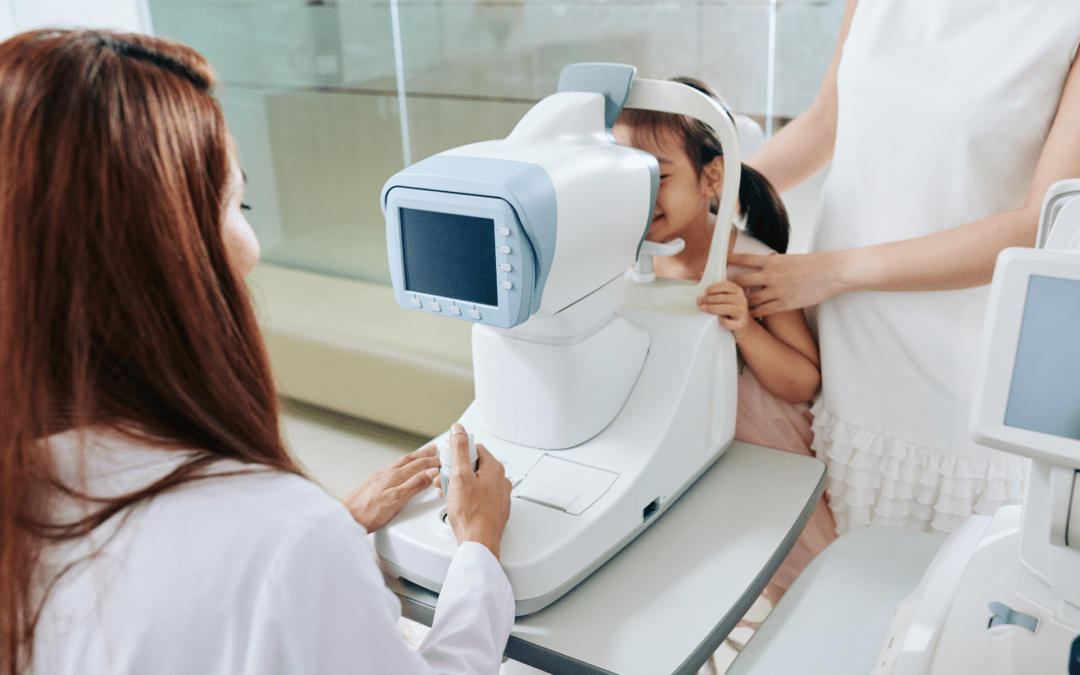
- Vision Testing: Even if a child cannot yet read, specially designed charts with pictures or shapes can test their ability to recognise detail at a distance.
- Eye Movement Tests: These assess the ability of the eyes to move and work together effectively, which is crucial for tracking and reading.
- Light Tests: A light and lenses can be used to estimate the eye’s prescription, determining if there are issues like nearsightedness, farsightedness, or astigmatism.
Many of these tests are undertaken while different lenses are placed in front of the eyes, to assess whether treatment or visual aids are needed. It is important to remember that your child’s eyes will also need to be examined either before, or just after they start school, to detect any problems early and ensure that the treatment that is needed can be received.
Ongoing Eye Care
If any issues are detected during your child’s eye appointment, then our team will be able to discuss the findings with you, as well as the recommended next steps. This may include prescribing glasses, offers for patching or eye exercises, or referrals for more specific treatments, but in most cases it will simply be recommendations on how to maintain your child’s current health and vision abilities.
These best practices may vary from child to child, accommodating any specific hobbies or requirements that your child may have, but maintaining good vision in children often involves more than just regular visits to the optician. As a parent or caregiver, make sure that you play an active role by observing and responding to any signs of eye strain or difficulty in seeing that your child may display. This includes watching for frequent squinting, complaints of headaches, holding books very close to the face, or a noticeable struggle in viewing distant objects, and if you notice any of these difficulties at any stage in your child’s development, be sure to speak to our team.
Alongside these considerations, promoting a healthy lifestyle also contributes to good vision health. This includes a balanced diet rich in fruits and vegetables, especially those high in vitamins A, C, and E, and omega-3 fatty acids, and whilst it may be hard to set boundaries around screen time at home, as children become more and more exposed to screens, it is important to encourage them to take breaks and reduce their time spent on devices.
Once school-aged, it’s advisable to have an eye exam every two years, unless our team suggests more frequent check-ups due to specific concerns, so by following these guidelines and maintaining a schedule of regular eye exams, you can help safeguard your child’s vision, facilitate better learning once in school, and maintain their development throughout their formative years.
Opticians for Kids
The primary goal of eye appointments for children of any age is to identify and address any visual problems early on, and by prioritising eye health from a young age, you can help set your child on a path to long-term health vision.
At Dominic Tunnell Opticians, we specialise in attentive eye care services designed to monitor and manage your child’s eye health, so if you are searching for the best opticians for kids, book an eye appointment with u today to guarantee your child the expert attention they deserve in a welcoming and child-friendly environment.